
AI + Outsourcing: A New Operating Model for Singapore SMEs
Key Summary
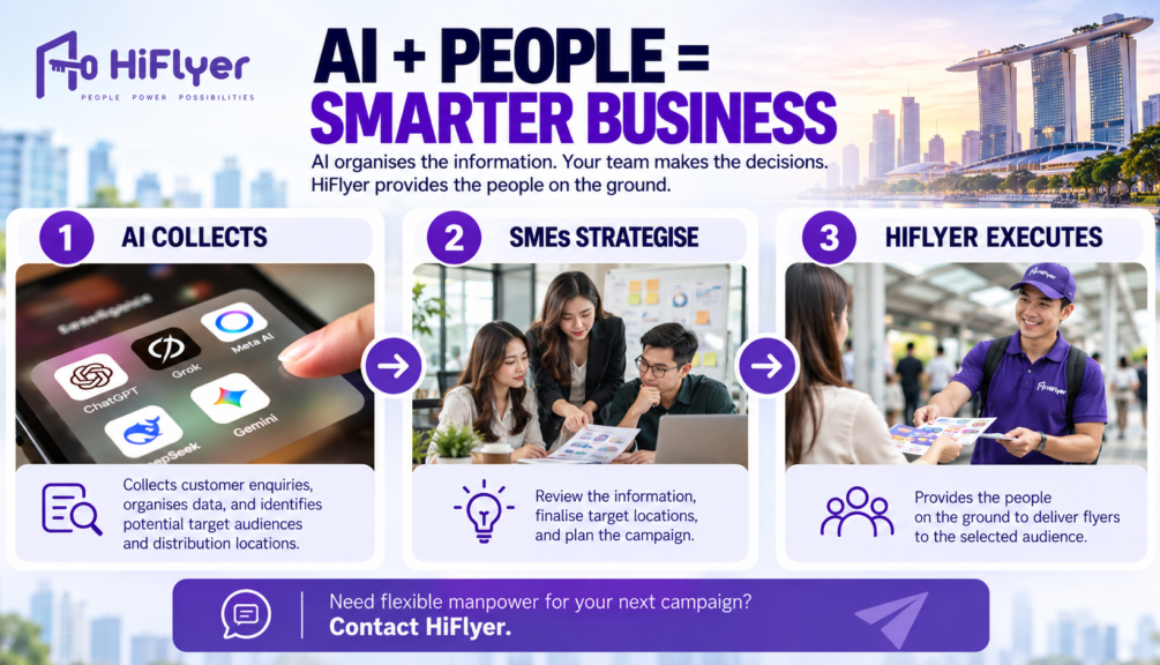
Singapore SMEs are increasingly exploring AI to improve productivity, but adopting technology is only one part of the process. A practical approach is to combine AI tools for repetitive digital tasks, an internal team for planning and decision-making, and outsourced specialists for activities that require human interaction or physical execution. For example, a business planning a flyer distribution campaign can use AI to prepare promotional content and organise market information, let its internal team approve the target audience and coordinate the campaign, and engage HiFlyer’s trained part-time workers to distribute the flyers. This approach helps businesses organise work according to their actual needs instead of automatically creating a permanent position for every task.
Introduction
There is more work to complete, but limited time, manpower, and budget to handle everything internally. Marketing campaigns require content, customer enquiries need responses, and promotional activities require people on the ground. Hiring a separate full-time employee for every responsibility can be difficult to justify, especially when some tasks occur only during specific campaigns or busy periods.
According to CNA’s report on Singapore’s Digital Economy Report 2026, AI adoption among Singapore SMEs increased from 14.5% in 2024 to 23.4% in 2025. Among enterprises using AI, 87.6% cited productivity and process improvement as a key benefit, while 44% reported cost reduction and resource optimisation. These figures show why businesses are paying greater attention to AI as a practical business tool.
However, adoption still comes with challenges. In its 2026 report on AI adoption among firms, Singapore’s Ministry of Manpower (MOM) found that 71.5% of firms had yet to adopt AI. Among firms that had started, only 3.8% were integrating AI into core processes. High implementation costs and a lack of in-house expertise were also common barriers. For SMEs, this highlights the value of starting with manageable tasks and combining digital tools with existing employees and external manpower where appropriate.
How Singapore SMEs Can Combine AI, Internal Teams, and Outsourced Manpower
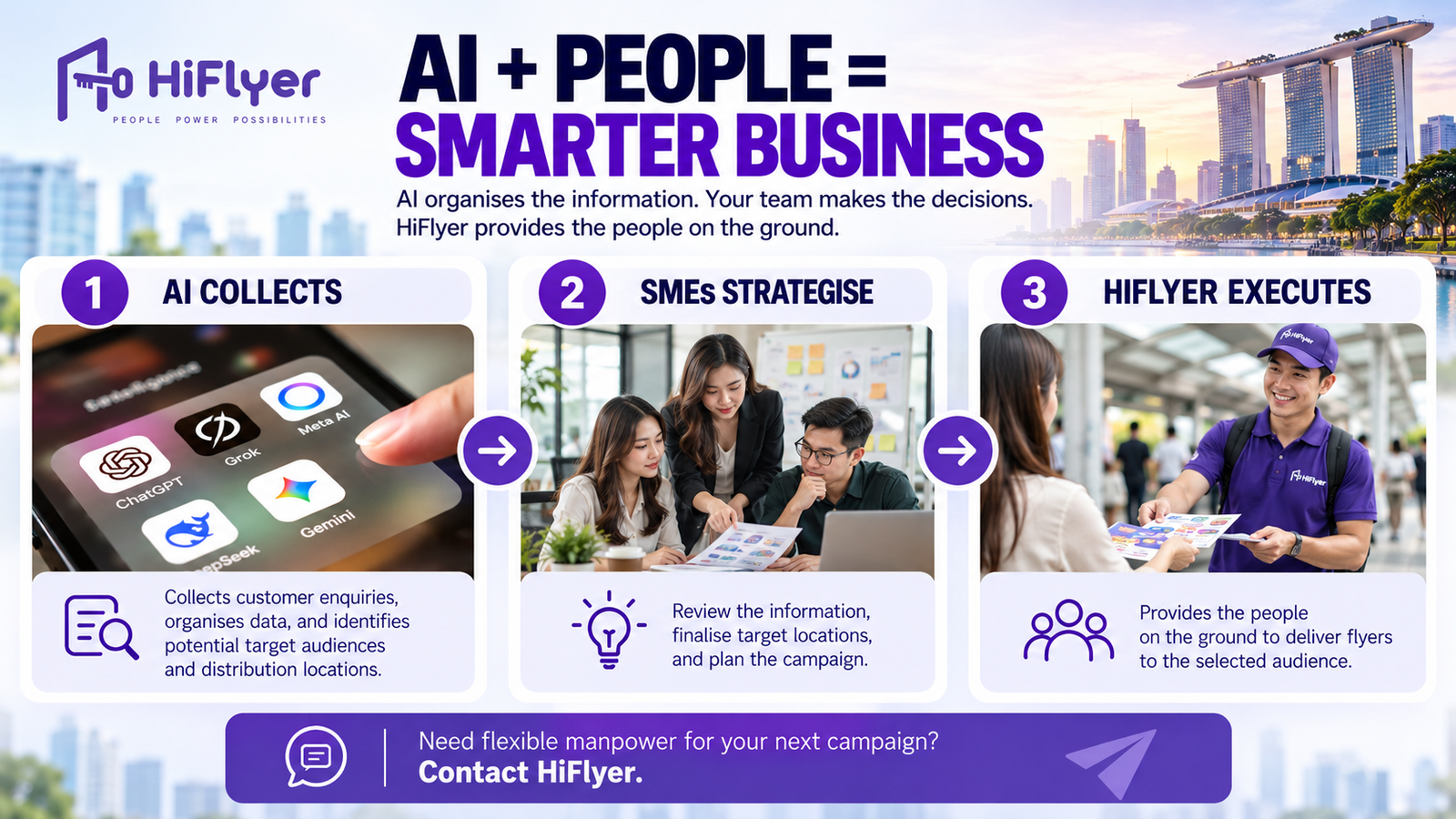
A practical way to approach AI and outsourcing is to divide work into three areas. First, AI and digital tools can assist with suitable repetitive tasks, such as drafting promotional materials, organising registration information, categorising enquiries, and preparing initial reports. Second, the internal team remains responsible for business decisions, quality control, customer relationships, scheduling, and approving the final campaign plan. Third, outsourced workers can handle activities that require physical presence, direct customer interaction, or temporary manpower.

This approach aligns with wider business changes in Singapore. According to the Singapore Business Federation’s National Business Survey 2026, 53% of businesses changed their work processes in the previous 12 months. Among those changes, 54% involved automating or digitalising specific tasks, 49% introduced AI-enabled tools, and 33% redesigned end-to-end processes. Meanwhile, 32% implemented job redesign. These findings show that businesses are reviewing how work is performed alongside adopting technology.

Singapore is also encouraging businesses to deepen their AI capabilities. The Infocomm Media Development Authority’s National AI Impact Programme, launched in March 2026, aims to support 10,000 enterprises over three years in advancing AI adoption. SMEs do not need to begin with a complicated transformation project. They can start with one recurring workflow, identify which tasks technology can support, decide what employees must oversee, and outsource suitable work that requires additional manpower.
How Singapore SMEs Can Combine AI and HiFlyer for Flyer Distribution
Imagine a Singapore retailer planning a promotional campaign to reach residents near a new outlet. The business needs to prepare flyers, identify suitable distribution areas, manage customer enquiries, and arrange workers for the campaign. If the internal team handles every activity manually, the workload can quickly become difficult to manage alongside normal store operations.

AI and digital tools can help prepare draft flyer content, organise information about potential target audiences and locations, and sort campaign registration data. A chatbot can also answer common questions or collect basic enquiry details, subject to appropriate checks and data-handling practices. The internal team then verifies the target audience and distribution locations, approves the promotional message, manages staffing and scheduling, and oversees the chatbot’s responses and follow-up process. AI-generated suggestions should be checked against local knowledge, campaign objectives, and the business’s actual customer data before decisions are made.
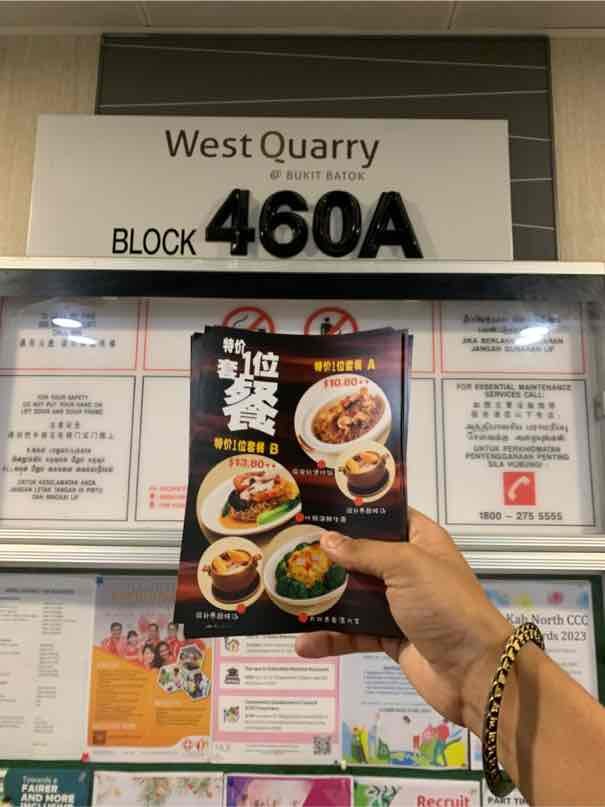
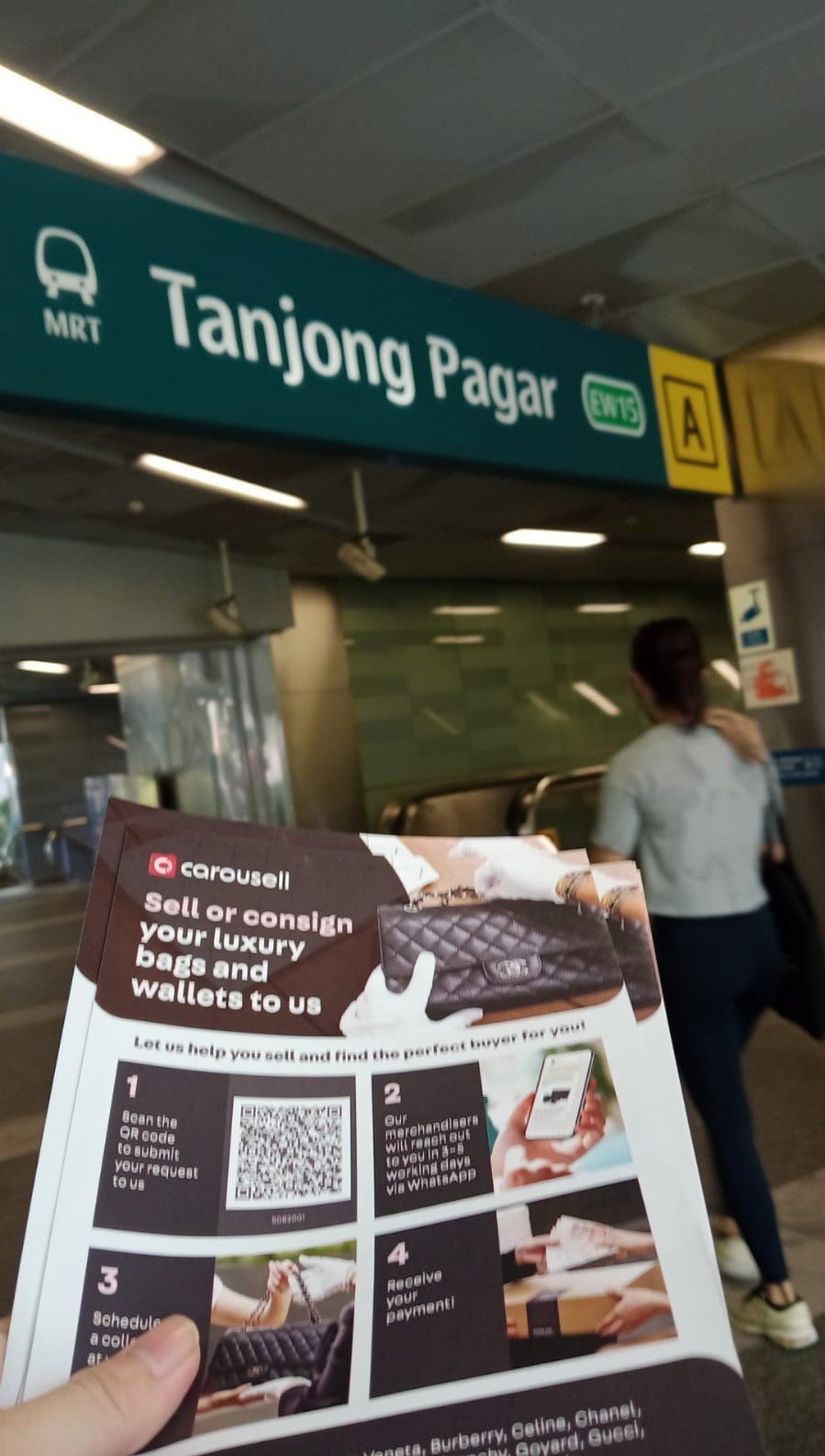
HiFlyer can support the physical execution by providing trained part-time workers to distribute the flyers in the selected locations. The business can then monitor distribution progress, review the available evidence of completed work, and assess whether the campaign reached its intended audience. This arrangement connects digital preparation with real-world execution and gives the SME access to campaign-specific manpower without automatically creating a permanent position. The same principle can apply to roadshows, event promotions, booth assistance, and surveys, where technology supports preparation while people carry out activities that require direct interaction.
How HiFlyer Can Help Singapore SMEs
Combining AI and outsourcing works best when every part of the process has a clear responsibility. Technology can assist with content preparation and information management, the internal team can control the strategy and quality, and external workers can carry out defined tasks. This helps SMEs avoid relying on technology for activities that require human judgement or expecting a small internal team to manage every operational detail alone.
HiFlyer helps Singapore businesses access trained part-time and flexible manpower for suitable activities such as flyer distribution, promotions, sales canvassing, booth assistance, and surveying. For example, when an SME uses AI to prepare campaign materials and organise target-market information, HiFlyer can provide workers to carry out the physical distribution or promotional activities. HiFlyer also trains newly hired workers before deployment, helping them understand campaign requirements and perform their assigned responsibilities.
For Singapore SMEs, the first step is to identify one process that consumes too much time or requires extra manpower only during certain periods. Review which tasks can be supported by AI, which decisions should remain with the internal team, and which activities could be handled by trained outsourced workers. What part of your next marketing campaign would you like to make easier? Comment “SMART WORKFLOW” and tell us your business type and the task you want to improve. We would love to hear your ideas and explore how AI, internal staff, and HiFlyer’s flexible manpower could work together for your business.
Q&A
How can Singapore SMEs use AI to improve productivity?
SMEs can use AI to assist with tasks such as drafting marketing content, organising information, preparing reports, categorising enquiries, and answering common customer questions. Businesses should review the results and ensure the tools are suitable for their workflows and data-handling requirements.
Does AI replace the need for employees?
AI can assist with certain tasks, but businesses still need people for decision-making, quality control, customer relationships, physical activities, and situations requiring human judgement. The right balance depends on the work involved.
Why should SMEs combine AI with outsourcing?
AI can support digital tasks, while outsourced workers can help with activities requiring additional manpower or physical execution. Combining them allows SMEs to allocate work according to its requirements and avoid automatically hiring permanent employees for temporary workloads.
How can HiFlyer help with AI-supported marketing campaigns?
HiFlyer can provide trained part-time workers for suitable campaign activities, including flyer distribution, promotions, booth assistance, sales canvassing, and surveying. Businesses can use digital tools to prepare and coordinate campaigns while HiFlyer supports the human execution required on the ground.
Should an SME adopt AI before outsourcing?
Not necessarily. The business should first identify the problem it needs to solve. Some tasks may benefit from automation, while others require people immediately. SMEs can evaluate each task separately and use the combination that best suits their workload, budget, and objectives.
Can HiFlyer support short-term campaigns without an SME hiring permanent employees?
HiFlyer provides access to flexible manpower for suitable campaign-based tasks. This can be useful when a business needs additional workers for a defined period, such as a flyer distribution campaign, product promotion, roadshow, or event. Businesses should assess their workload and staffing requirements before deciding which arrangement is most suitable.